When I first started teaching English, I quickly realised that English speakers express themselves differently depending on their culture. I am British and every time I speak my choice of words reflects my British background. This influences how I express politeness, and how I interact with others. This is something that English learners might not realise at first, but it’s incredibly important.
If you’re learning English, you might be focusing on pronunciation, vocabulary, or grammar rules — and of course, those are all essential. But I believe we should also focus on how English reflects culture. We can’t truly communicate unless we understand the cultural context of the conversation.
In this guide, I’m going to focus on Modal Verbs. These are words like can and could (to show ability), should (to give advice), would (to make requests and offers), may (to give or ask for permission), might (to express possibility) and must (to express obligation)
As you may have noticed, I will highlight the modal verbs by using bold print.
Apologising (Even When We Don’t Need To!)
In my culture, we say “sorry” — a lot. I might even say “sorry” before I speak, especially in situations where I feel I shouldn’t disturb someone.
For example, if I need to pass someone on a crowded train, I’ll probably say: “Sorry, excuse me, could I just squeeze past? Thank you.”
You could say that this is overly polite — and maybe it is. In many cultures, people might simply say “excuse me” and walk past. But for me, adding “sorry” and “thank you” just feels natural. It’s a way of showing respect.
I’ve noticed that in some cultures, people wouldn’t apologise unless they had made a clear mistake. In Britain, however, we might apologise just to keep the peace or avoid seeming rude.
Complaining Politely (or Not at All)
Let’s say I go to a café and my coffee is cold. What should I do? Honestly, I’d probably drink it. I could complain, and I know how to — I might say something like:
“Sorry, but the coffee isn’t very hot — could I possibly have a fresh one?”
But in reality, many British people wouldn’t say anything unless the issue was really serious. This is one of those situations where we would prefer to avoid conflict, and would rather stay polite, even if it means being slightly uncomfortable.

So, umm, how's your food darling?
Oh, yes, umm, it's fine!
In other cultures — like in the U.S., southern Europe, or the Middle East — people might feel very comfortable expressing dissatisfaction. That’s not wrong at all; it’s just different. Understanding these contrasts can help you decide what kind of tone to use in conversation.
Politeness and Indirectness
One of the most noticeable features of British English is how indirect we can be, especially when we ask for things.
Instead of saying “Help me,” I would usually say:
“Could you give me a hand?”
or
“Would you mind helping me for a moment?”
Both of these sentences use modal verbs — could and would — to soften the request and make it sound more polite. In British culture, directness can seem a bit rude, even if that is not the intention of the speaker.
So when I speak English I use modal verbs frequently. For me it’s just normal.
Respecting Space and Privacy
I should also mention how much we value personal space and privacy. I don’t often ask people personal questions — especially about money, age, or family issues — unless I know them well.
Also, I prefer to keep a little distance when speaking. If someone stands too close to me, I might feel a bit uncomfortable. If it continues, I might say:
“Sorry, would you mind giving me a bit more space?”
Or alternatively, being British, I might not say anything at all. However, let’s assume that I do. Again, notice how modal verbs help us make a polite request. Saying “Move back!” would sound very rude to a British person. The polite structure is just part of how we communicate.
Queuing (Very Seriously!)
In Britain, queuing (or lining up) is a serious matter. If I arrive at a bus stop or supermarket, I’ll automatically look for the end of the queue and stand there. If someone tries to skip ahead, people might get annoyed.
I would never jump a queue — and I don’t think most British people would either. It’s a simple act of fairness, but it’s also deeply cultural. In some countries, queuing is more flexible.
For example, in Thailand queuing is mainly orderly and polite, the same as in the UK, but in some places rather than actually standing in line, Thai people will simply take off their shoes and leave them as a ‘placeholder’ for their position in the queue!
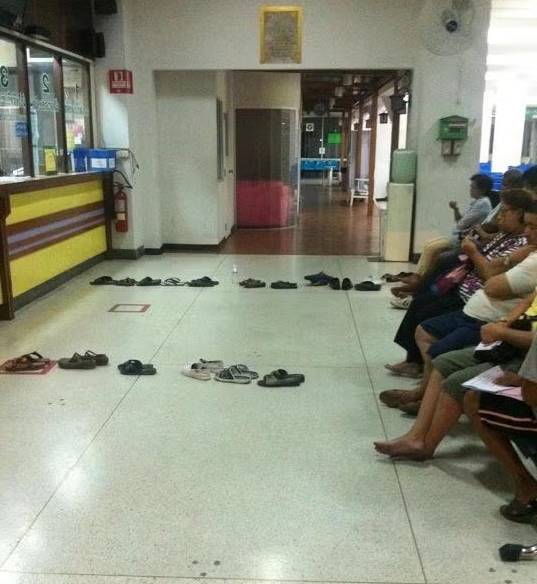
In contrast, China is somewhat ‘infamous’ for having extremely disorderly lines with lots of cutting in. These differences are all due to culture and history.
This is a very interesting topic in itself and something that students often enjoy discussing in their online English lessons.
In any case, if you happen to be in the UK, you should wait your turn.
Food and Cultural Traditions
Food is always a great conversation starter. In the UK, we traditionally have a Sunday Roast — meat, potatoes, and vegetables, shared with family. Fish and Chips is also a very culturally famous British food. I would love to share this meal with my students and then ask their opinion. Personally it’s not one of my favorites so I would not take offence if they were rude about it
Another well-known tradition is Afternoon Tea, where we enjoy tea, sandwiches, and cakes — often for special occasions.
If I share a meal with others at home or in a restaurant I know that I should not start eating until everyone else at the table has their meal in front of them. Recently I was in Thailand where food is served as and when it is ready. Often this is shared but it is normal for people to start eating at different times. This would be considered very rude in the UK.
Body Language and Emotions
In my culture, we don’t always show our emotions openly. The phrase “stiff upper lip” means keeping your feelings private — especially in public.
Other cultures may encourage open expression — laughing loudly, crying openly, speaking with passion. British people often feel more comfortable with a neutral tone and subtle facial expressions.
Even eye contact is something to consider. In the UK, some eye contact is polite, but too much might seem intense or aggressive.
Wrap Up
So there we are, as a British person, I use English in ways that reflect my culture. I apologise often, avoid being too direct, queue patiently, wait for others to start eating and express politeness with modal verbs. If you would like to practice this you could do the following:
- Try using could, would, might, and should when making requests or suggestions. They help you sound respectful and natural
- Try talking to people from different English speaking cultures. You might be surprised by how different they are! Compare styles from the UK, USA, Australia, and more.
- If you don’t have the opportunity to speak directly you can watch TV shows from different cultures to see if you can detect the differences.
- Try my intro session and have a real conversation with an ESL english tutor.