In English the word “slip” has more meanings than you may think.
It pops up everywhere, from casual chat to technical talk, and it can act as both a verb and a noun.
Its uses cover a surprising range of meanings, which we will explore in this post.
Some quick examples:
- moving smoothly or accidentally,
- making mistakes,
- talking about clothing
Let’s talk about “slip” and see how versatile this word really is!
Using “Slip” as a Verb: Movement and Actions
The verb form of “slip” often deals with movement and actions.
Sometimes it describes something smooth, sometimes something accidental, and at other times something quiet or sneaky.
Physical Movement:
Sliding and Falling
Probably the most common use of “slip” is as meaning sliding unintentionally.
Imagine stepping onto a patch of ice, you lose your footing and slide out of control, maybe ending up on your backside! That’s slipping.
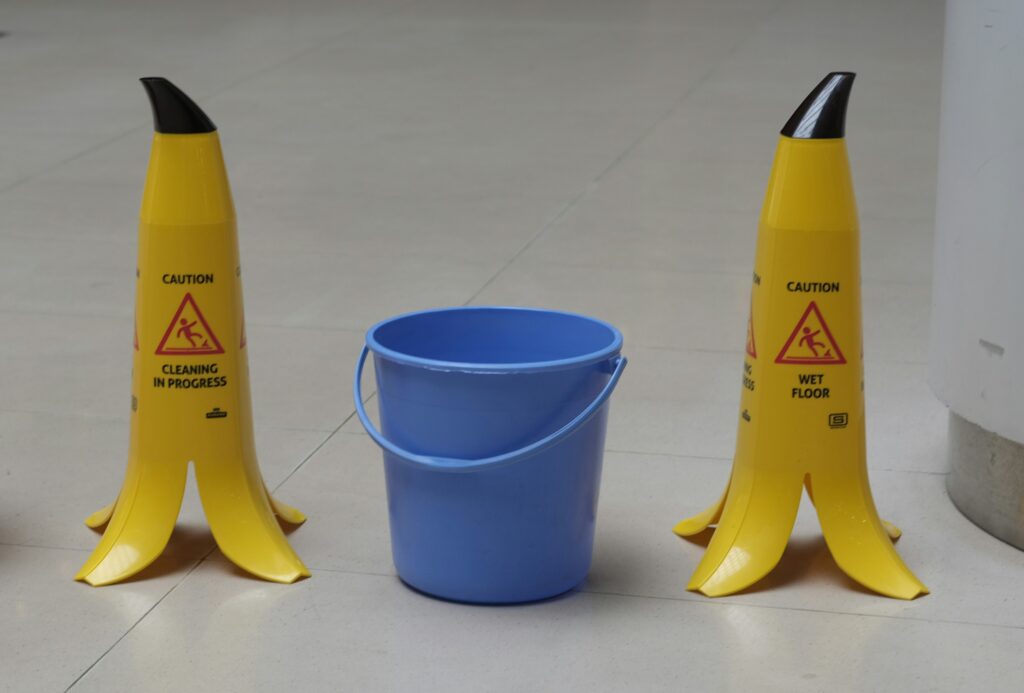
Example: “She slipped on the wet floor and nearly fell.”

Sliding Smoothly
It can also mean something sliding gently and smoothly, like slipping a knife back into its sheath or slipping into the seat of your car.
Example: “The young man slipped the letter into her pocket without her noticing.”
These meanings describe how “slip” often connects with motion that’s either:
- unwanted
- effortless.
For more detailed definitions, you can review Merriam-Webster’s entry on slip or check out the Cambridge Dictionary.
Stealthy or Quiet Movement
Another common use of “slip” is for stealthy or quiet movement that does not draw attention and remains unnoticed. It can also be used in the context of disappearing quickly.
Example: “She slipped out of the restaurant unnoticed.”
Example: “The cat slipped silently across the garden.”
Quick and Discreet Actions
Sometimes “slip” can mean rapid or hidden actions beyond just movement. You may slip on a coat quickly when leaving your apartment, or slip a note to a friend in class without others seeing.
Example: “She slipped off her shoes after a long day.”
Example: “He slipped the key into her hand quietly.”
“Slip” in this context captures the idea of doing something quickly and gently.
Using “Slip” as a Noun: Mistakes and Objects
As a noun, “slip” offers a whole new range of meanings. It can be a small error, a physical item, or something more technical.
Mistakes and Errors
A “slip” often means a minor mistake or lapse.
- A slip of the tongue: accidentally saying the wrong thing.
- A slip in judgment: making a small error when deciding.
- Errors that “slip through” proofreading.
These slips aren’t usually huge problems but can lead to misunderstandings or the need to correct.
Physical Objects and Clothing
“Slip” also names certain objects, especially in clothing and stationery.
- An undergarment worn beneath dresses, usually lightweight and close-fitting, called a slip.
- Slips of paper, like notes, tickets, or little pieces of information.
- Narrow strips or pieces in crafts or some industries.
Example: “She wore a silk slip underneath her dress to keep it smooth.”
Idiomatic and Figurative Uses of "Slip"
“Slip” shows up in plenty of idioms that add color to everyday English. These expressions go beyond literal meanings and tap into ideas of mistakes, sneaking away, or things barely missed.
- Slipped my mind: forgetting something.
- Slip through the cracks: something overlooked or missed.
- Slip under the radar: going unnoticed, avoiding attention.
Idioms like these pack a lot of meaning into one short phrase and are common in both English conversation and writing.
For my free interactive course on English language Idioms click here.
Wrap Up
“Slip” is a word that feels simple but really stretches across many different contexts.
From the literal act of sliding to subtle and quick actions, from mistakes to clothing, and even specialized uses in science and industry.
Understanding the varied meanings of “slip” adds richness to your English conversational ability.
Whether you’re describing a stumble, a small mistake, a secret move, or a piece of clothing, “slip” fits right in – shifting smoothly with the situation.
A good ESL English tutor will be able to explain these concepts in a way that’s easy to understand and practice. If you are considering some lessons with a conversational English tutor you can start a conversation with me by booking a stress free Intro session below.
-
booking
Intro English Lesson with Tim
$10.00Rated 4.50 out of 5Book NowYour first 40-minute session is only $10. A simple, low-pressure way to get started. We’ll talk about your goals, your level, and what kind of learning works best for you. You can book a date and time below, an instant booking confirmation is sent after checkout. Your online meeting session details will be automatically sent to you.